Before You Sign: A Viewer’s Checklist for Britain’s Prime Squares

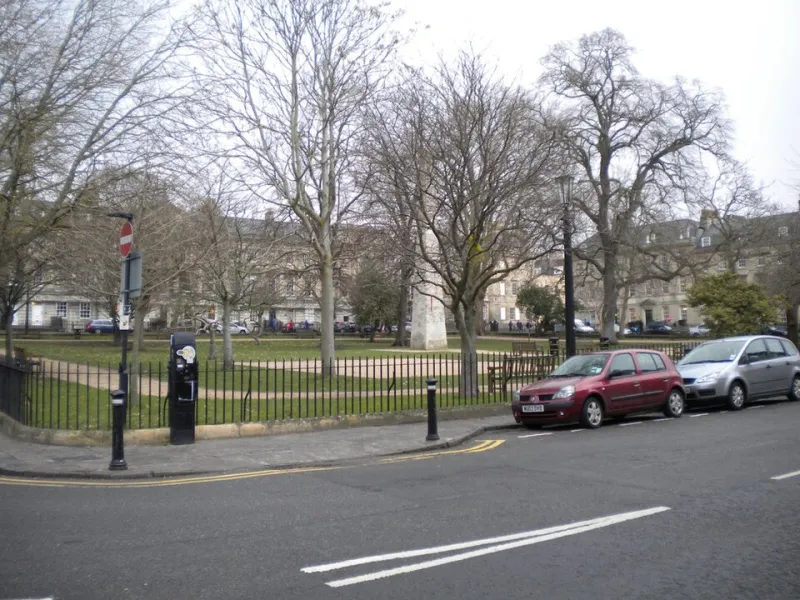
Photo: http://en.wikipedia.org/wiki/User:Citizensmith, CC BY-SA 3.0, via Wikimedia Commons
A square is not just a view. It is a set of shared systems: gardens, bins, trees, roads, events, service charges and the informal rules that govern how a public-looking space is actually used. That is why a viewing on or near a UK city square needs a more disciplined approach than a standard flat or house inspection.
For clarity, we call this the Eleventh Square scorecard: eleven tests, each scored from one to five. A perfect score is 55. The aim is not to find a perfect square, but to compare squares objectively and to avoid post-purchase surprises.
How to use the scorecard
Score each point during the viewing and again after a second visit at a different time of day. Ask the agent or landlord for evidence where possible: service-charge accounts, garden-access rules, refuse arrangements, event notices, parking permits. A square that scores well on architecture but poorly on logistics is a square that will cost you time and money.
1. Tree canopy and summer shade
Look up. A mature canopy is one of the great amenities of a British square, but it also affects light, leaf litter, gutters and insurance. Check whether the trees are subject to preservation orders and who maintains them. A dense canopy can be glorious in July and gloomy in January. Score the balance, not just the beauty.
2. Morning light and orientation
Visit at the time you will actually use the room. A south-facing square-facing flat may be bright; a north-facing second-row flat may be calmer and cooler. Morning light matters for kitchens and home offices. Afternoon light matters for living rooms. Check the orientation of the property, not just the square.
3. Garden access and key arrangements
Is the garden private, communal or public? If access is included, is it written into the lease or tenancy? Is there a key, a fob, a booking system or a residents’ committee? Ask about guests, children and dogs. A garden that cannot be used easily is a garden that adds premium without adding much life.
4. Service charges and reserve funds
For leasehold properties, service charges are the quiet test of square living. Ask for the last three years of accounts and the current reserve fund. Check what is included: gardens, lighting, security, cleaning, insurance, lifts, porters. A low charge can be a warning sign if the reserve fund is thin and major works are due.
5. Bin-store logistics and refuse routes
This is unglamorous and essential. Where are the bins kept? Who puts them out? How far is the carry? Are there restrictions on collection times? In terraced squares, refuse logistics can dominate the communal experience. A poorly planned bin store can create smells, pests and neighbour disputes that no amount of Georgian detailing will solve.
6. Noise and the events calendar
Squares host fairs, markets, concerts, filming and private events. Ask for the events calendar and speak to residents about the noisiest weekends. Check the route of delivery vans, late-night licences and any nearby pubs or hotels. A square that is quiet on a Tuesday morning may be very different on a Saturday afternoon.
7. Tourist and visitor pressure
Famous squares attract visitors. That can be pleasant for the local economy and irritating for the front door. Walk the pavement outside the property and note where people stop, photograph and gather. Check whether the square has seasonal tour groups, coach drop-offs or short-let concentrations. The second row often wins here, but verify rather than assume.
8. Parking, permits and electric charging
If you need a car, check the permit zone, waiting restrictions and availability. Ask about allocated parking, garages and electric charging. In central squares, parking can be more valuable than a spare bedroom and harder to secure than a garden key. For renters, confirm what is included in the tenancy and what is merely nearby.
9. Community feel and governance
A square is a small polity. Is there a residents’ association, a garden committee or a management company? How are decisions made? Are there annual meetings, newsletters or WhatsApp groups? A well-run square feels generous; a poorly run one feels like a dispute waiting to happen. Ask how newcomers are welcomed and how conflicts are handled.
10. Conservation, listed status and alteration consent
Many prime squares sit within conservation areas or contain listed buildings. Check what consent is needed for windows, doors, shutters, Satellite dishes, heat pumps and external paint. The rules can be strict and slow. If you plan to renovate, confirm the practical scope before you exchange contracts.
11. Connectivity and everyday errands
Finally, test the ordinary life of the address. Walk to the nearest shop, pharmacy, café, bus stop and station at a realistic hour. Check broadband speeds and mobile signal. A square can feel central on a map but isolated on a rainy Sunday. The best prime address is the one that works for your daily routine, not just your weekend guest.
The Eleventh Square verdict
Use the scorecard as a conversation tool. A property that scores 40 might still be right if the weaknesses are ones you can live with. A property that scores 50 might be wrong if the service charge is unsustainable or the garden access is illusory. The point is to see the square as a system, not a backdrop, and to sign only when the numbers and the daily experience agree.