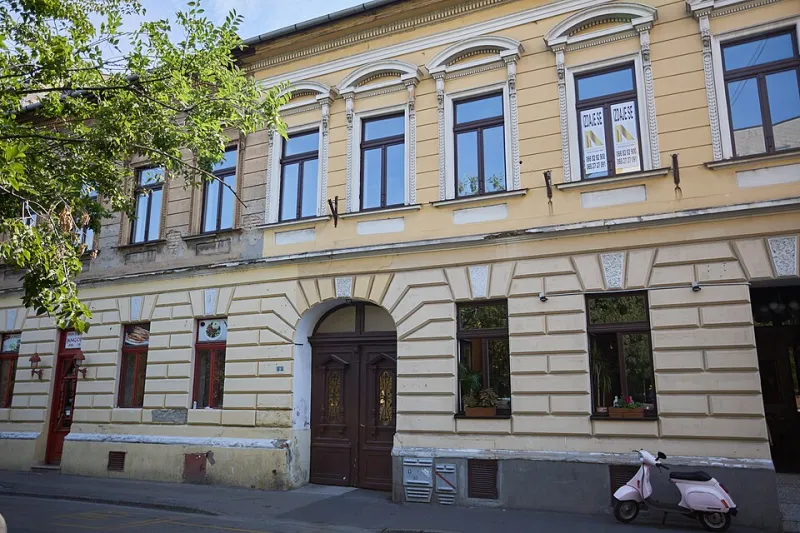
The Value Halo Next Door: Britain’s Quiet Premium Just Off the Square
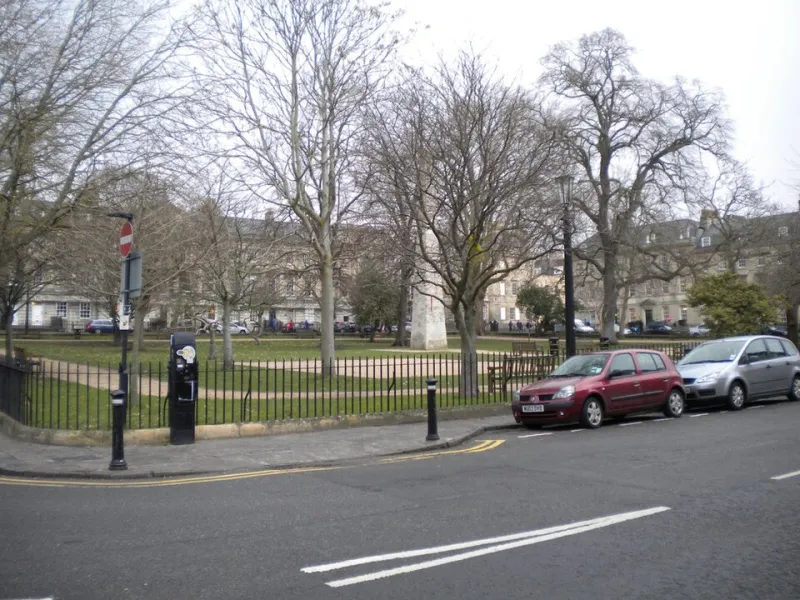
Photo: Richard Vince , CC BY-SA 2.0, via Wikimedia Commons
Britain’s most celebrated city squares are, by design, conspicuous. They are the addresses that appear on postcards, in estate-agent windows and on the itineraries of visitors who have come to see the Georgian terrace or the plane trees. But the property market has a habit of overpaying for the conspicuous. The more interesting question—and the one that should occupy buyers and renters in 2026—is what happens one street back.
The halo, not the trophy
Call it the value halo. A famous square confers prestige, convenience and a recognised address on the streets around it. Yet the premium attached to fronting the square is not always matched by a proportional improvement in daily life. In many cases, the second row enjoys the same walk to the gardens, the same cafés and the same architecture, while absorbing less footfall, less event noise and less of the management burden that comes with being the public face of a square.
This is not an argument against squares. It is an argument against paying for the trophy when the halo will do. The distinction matters most in cities where the prime residential market is compact and where a single street can separate the tourist route from the school run.
London: the edge of the garden
Take Mecklenburgh Square on the eastern edge of Bloomsbury. The square itself has the gardens, the institutional heft and the literary associations. One street back—towards Doughty Street or John Street—the terraces remain handsome, access to the same amenities is unchanged, but the tourist traffic is thinner and the premiums are less aggressive. The same pattern appears around Paultons Square in Chelsea and Vincent Square in Westminster: the square sets the tone; the adjoining streets do the living.
London is particularly prone to this effect because the square is often a semi-private room with a public face. Buyers pay for the key, the view and the address. Renters pay for the same, sometimes without the key. The second row can offer the view from an upper floor, the same postcode district and a shorter walk to the Tube, while sparing the occupant the summer tour groups and the open-day chairs.
Bristol, Leeds and Edinburgh: variations on a theme
In Bristol, Queen Square remains the city’s formal drawing room. King Street and Welsh Back are busier, but the quieter streets immediately behind the square—towards Prince Street or Redcliffe—offer a version of the same central life with less of the evening economy on the doorstep. The premium for a square-facing address is real; the discount for a lateral move is often more negotiable.
Leeds offers a commercial variation. Park Square is the city’s legal and professional address, and the square itself carries a premium that is as much about status as residential amenity. Streets such as Park Place and York Place, or the quieter edge towards East Parade, allow residents and occupiers to borrow the address without paying for the front row. In a city where the professional core is compact, one street is a very short distance.
Edinburgh’s New Town makes the point most elegantly. Charlotte Square is the set piece; Hope Street, Young Street and Glenfinlas Street are the wings. A flat one street back can share the same stone, the same skyline and the same walk to the gardens, yet avoid the tour groups that gather at the square’s edges in August. The saving is not uniform, but the principle is.
The arithmetic of the second row
Price-premium data should be treated with care. Square-fronting properties are heterogeneous, and a single sale can distort an average. Even so, broad patterns are consistent. In prime London, square-fronting houses have historically traded at a premium of roughly 15 to 30 per cent over equivalent stock one or two streets away; in regional prime markets the gap is often narrower, at 5 to 15 per cent. These are indicative ranges rather than universal rules, but they explain why the second row attracts both value-seeking owner-occupiers and investors who understand that the halo travels.
Renters see the same effect in a different form. A flat on the square may command a 10 to 20 per cent rent premium, while a comparable flat around the corner may be 5 to 10 per cent cheaper, with the same postcode district and often the same garden access. In a softer lettings market, that gap becomes a negotiating tool rather than a fixed law.
What you keep, what you give up
The trade is not automatically favourable. A second-row property may lack direct garden access, face a busier cross-street, or sit in a different service-charge regime. It may be in a different conservation area, with different rules on windows and shutters. The point is to price the trade, not to assume it.
What the second row usually keeps is the thing that matters most: the amenity of the square. The walk, the trees, the light and the sense of address remain. What it gives up is the front-row theatre. For many buyers and renters, that is a bargain. For some, it is a compromise too far. The mistake is to treat the front row as the only legitimate expression of square living.
How to find the sweet spot
Start with the block, not the brochure. Walk the route from the property to the square at 8am, 1pm, 8pm and 11pm. Identify the intervening uses—hotel, pub, school, delivery bay, refuse store—that sit between you and the garden. Check whether garden access is legal, practical and transferable. Compare service charges and reserve funds on both sides of the square. Ask residents what the square is like in winter, not only in June.
Then look at the numbers over time. Ask agents for sold prices on the square and one street back over five years, not just the last two. Look at rental listings for both rows and compare what the extra money actually buys. In many cases, it buys a view, a key and a address. In some, it buys noise, maintenance and a premium that is hard to exit.
The Eleventh Square view
The smartest prime address is not always the one that shouts. It is the one that borrows the square’s advantages while avoiding its costs. In 2026, with buyers more price-sensitive and renters more mobile, that quiet second row deserves a second look. The square may be the headline; the street behind it is often the better story.