The Quiet Premium: How Car-Free Edges Are Reshaping Prime Square Values
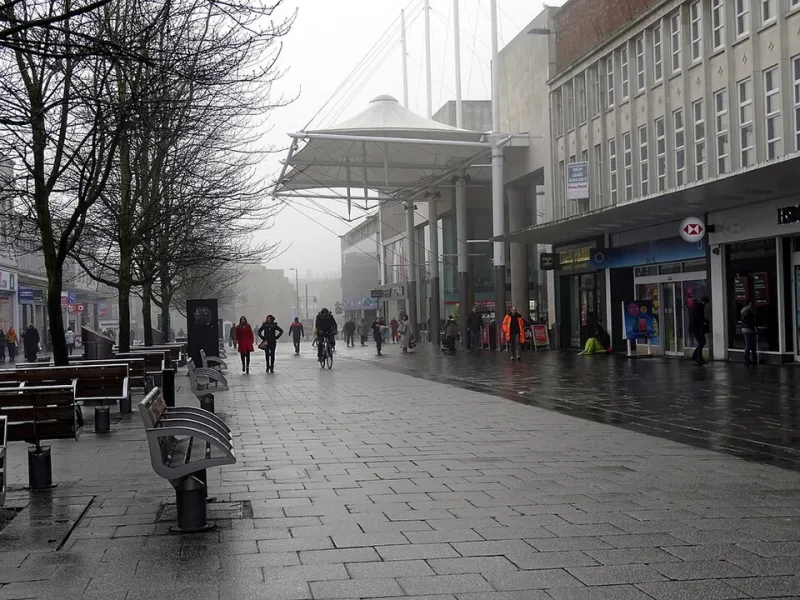
Photo: John Lucas , CC BY-SA 2.0, via Wikimedia Commons
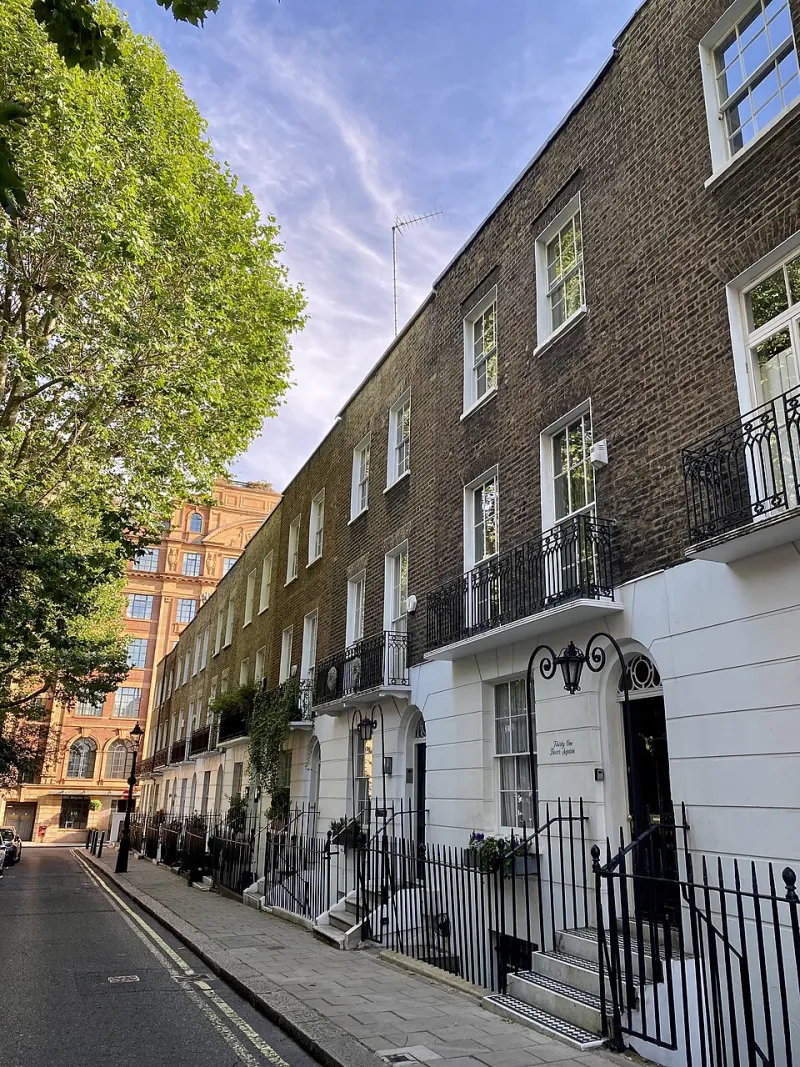
The prime city square has traditionally been valued for address, architecture and the presence of a garden. In 2026, movement is becoming part of the same calculation. Pedestrianised edges, timed closures, low-traffic neighbourhoods, outdoor dining and cargo-bike deliveries are altering how people arrive at a square, how they use its edges and how they perceive its value. The shift is not uniform, and it is not universally welcomed. But it is now a factor that buyers, renters and developers cannot sensibly ignore.
From carriageway to courtyard
Many British squares were designed for carriages and later adapted for cars. The perimeter became a place to park, load and pass through. Over the past decade, and with particular momentum since 2020, councils have begun to reverse that hierarchy. Some schemes are permanent and physically enforced; others are experimental, seasonal or dependent on temporary traffic orders. The difference matters. A square with a well-designed pedestrian edge, adequate loading windows and clear servicing arrangements is a different proposition from one with a few planters and a sign.
What the schemes actually do
The phrase car-free is often used loosely. A square may be car-lite rather than car-free. One side may be pedestrianised; another may retain access for residents, blue-badge holders, emergency vehicles and refuse collection. Dining licences may occupy former parking bays. Modal filters may prevent through traffic while allowing local access. School streets may change the morning and afternoon rhythm. These distinctions shape the lived experience and the investment case. A square that is quiet because no one can get to it is not the same as a square that is quiet because access has been carefully managed.
The appeal for families and remote workers
For families, the attractions are straightforward: safer edges, cleaner air, more space for children and a stronger sense of neighbourliness. For remote workers, the square becomes an extension of the home office, a place for a short walk between calls and a substitute for the commute. Hospitality businesses value the additional covers that pavement dining can bring. Estate agents in several UK cities now describe a quiet, well-maintained square edge as a selling point in its own right. The appeal is strongest where the scheme is legible, well kept and supported by the local community.
The friction: access, deliveries and inclusion
The objections are equally practical. Residents with cars may lose convenient parking. Tradespeople and movers need to reach front doors. Deliveries, refuse collection and emergency access must be planned rather than assumed. Blue-badge holders and people with limited mobility need clear exemptions and drop-off points. Businesses need servicing arrangements that do not turn the square into a obstacle course. Consultation can be divisive, and enforcement can be inconsistent. A scheme that looks elegant on a plan may fail in daily use if loading is unmanaged or if the council lacks the resources to enforce it.
What buyers are paying for
The market is beginning to separate two kinds of quiet. The first is incidental: a square that happens to be off a busy route. The second is designed: a square where public realm, access and maintenance have been deliberately coordinated. The second tends to command the more durable premium. Buyers are not simply paying for the absence of cars. They are paying for a managed environment, predictable access and a sense that the public realm will be maintained. That premium is not linear. It is strongest for family houses facing the square, for properties with good outdoor space and for locations where the scheme is embedded in local policy rather than dependent on a temporary order.
The investment case in 2026
In 2026, the question is less whether car-free squares are desirable than whether a particular scheme is durable. Durability depends on statutory footing, funding, maintenance and political support. A pedestrianised edge that is well used, well cleaned and well enforced can strengthen long-term values. A scheme that inconveniences residents without improving the public realm can become a discount. The risk is not only reversal. It is also the slow erosion that follows when planters are not replanted, dining furniture is not managed and loading restrictions are ignored.
How to appraise a car-free square
- Read the traffic regulation order and any experimental order.
- Check loading windows, servicing arrangements and blue-badge access.
- Ask about parking permits and any changes to resident entitlements.
- Review consultation responses and council committee minutes.
- Visit at different times of day, including school run and evening trading hours.
- Inspect the quality and maintenance of public realm, seating and planting.
- Confirm who pays for cleaning, enforcement and future works.
- Consider nearby schemes and whether they support or undermine the square.
For Eleventh Square readers, the practical conclusion is that the car-free square is not a single product. It is a spectrum from temporary closure to permanent pedestrian priority. The quiet premium belongs to squares where quiet is designed, maintained and fairly accessed. Where those conditions hold, a calmer square is likely to remain a stronger long-term property bet. Where they do not, the absence of traffic may be the least of the issues.