Behind the Facade: The Service Lane That Quietly Sells a Prime Square Home
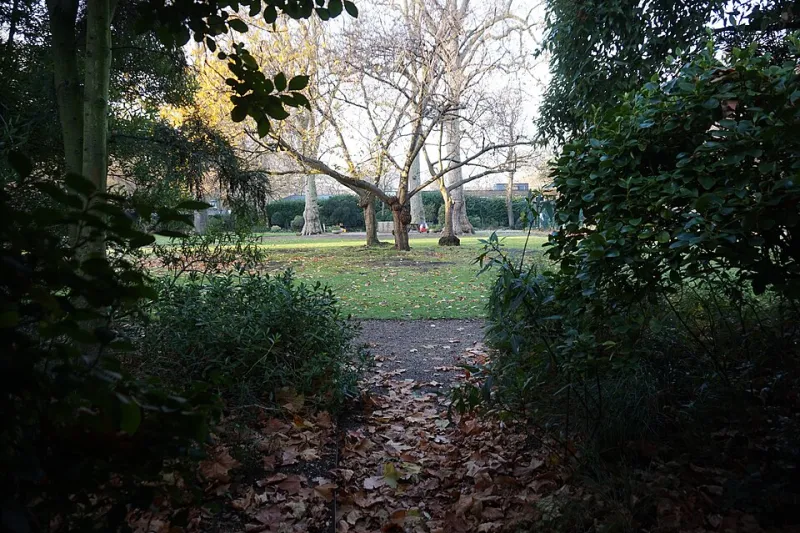
Photo: Ian S , CC BY-SA 2.0, via Wikimedia Commons
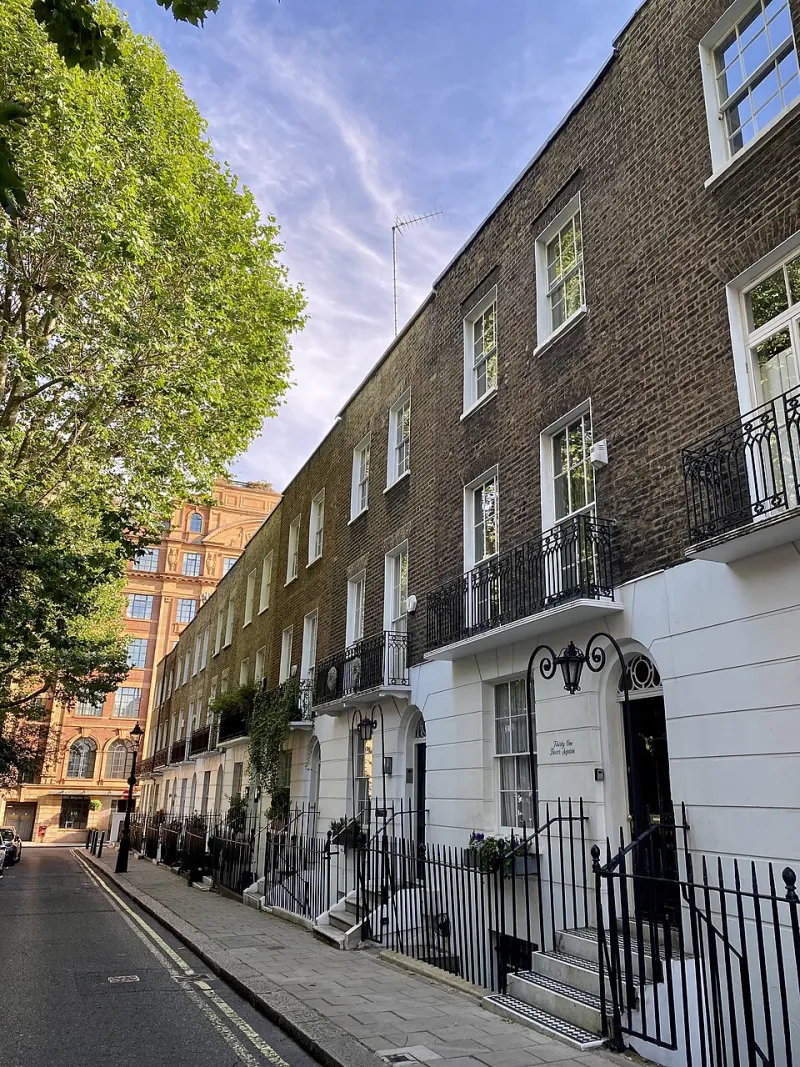
The front door of a prime square house is a performance. The fanlight, the steps, the ironwork, the carefully placed olive tree: all of it is designed to be seen. Yet the part of the property that increasingly determines how well a square works — and what it costs to buy or rent there — is often hidden at the back. Service lanes, mews entrances, bin stores, delivery routes and rear gates are the operational anatomy of a prime address. As front gardens become car-free and parcel volumes continue to rise in 2026, that working half is emerging as a genuine differentiator.
The square has two frontages
Estate agents are understandably fond of the ceremonial side of a square: the terrace, the communal garden, the view across the railings. But a prime square is also a logistics machine. Refuse crews need access. Groceries, prescriptions and online orders need somewhere to go. Bicycles, prams and e-cargo bikes need to be stored and moved. Tradespeople need to reach a rear door without crossing a formally planted front garden. In squares where the front is protected and pedestrian-led, the rear becomes the pressure valve.
That is why a well-organised service lane can feel like a luxury. It keeps bins out of sight, allows deliveries to reach a kitchen door, and gives residents a discreet route in and out. A poorly organised one does the opposite: it becomes a place of blocked access, disputed parking, overflowing bins and improvised parcel drops. The difference is rarely visible from the pavement.
What to inspect before you fall for the drawing room
A viewing should include a walk to the rear of the property, ideally on a bin day and again at a busy delivery hour. Look at the surface of the lane: is it adopted or privately maintained, well drained or prone to standing water? Check the gate width and the turning space. Ask where refuse bins are stored between collections and whether the store is allocated to the property or shared informally. Smell and sight lines matter here; so does lighting.
Then move from observation to paperwork. Ask the seller or letting agent to identify who owns the lane, who maintains it, and who has a right of way over it. Service lanes often carry easements, covenants and maintenance obligations that are easy to overlook until a bill or a dispute arrives. A solicitor should confirm whether access is legally secure, whether the lane is adopted by the local authority, and whether any restriction prevents vehicles, deliveries or changes of use.
For leasehold properties, the management pack should show how rear access and bin storage are treated in the service charge. For freehold houses, the title and any transfer documents should reveal whether neighbouring owners share responsibility. If the lane is unadopted, ask who repairs it and how costs are apportioned. These are not glamorous questions, but they are precisely the ones that protect the quiet enjoyment of a prime address.
The mews entrance is not a substitute for a plan
Mews access can be a considerable asset, particularly where a house has been reconfigured to open onto a rear courtyard or garage block. But mews entrances vary enormously. Some are wide, lit and actively managed; others are narrow, dark and dependent on informal cooperation between neighbours. A gate that opens easily on a dry Tuesday may be less accommodating when a delivery van, a refuse lorry or an emergency vehicle needs to pass.
Buyers should also consider how the rear route will be used in practice. Will a weekly shop have to be carried through the house? Is there space for a cargo bike? Can a pram be stored without blocking a shared passage? In rental properties, these questions matter just as much. Tenants are often less willing to tolerate a bin store that doubles as a parcel depot or a rear gate that is permanently propped open.
A quiet premium for the practical
The back-gate premium is not a single figure. It is the accumulated value of access that works: a lane that is legally secure, a bin store that is properly allocated, a delivery route that does not disturb the square, and a rear entrance that gives everyday life a sensible shape. In a market where front gardens are increasingly controlled and front doors are increasingly photographed, that practical rear infrastructure is scarce.
At Eleventh Square, the lesson for 2026 is straightforward. Inspect the square from the pavement, but do not stop there. Walk the service lane. Read the title. Speak to the managing agent. A prime square home is not only a facade; it is a system. The better the system works behind the postcard, the more calmly the postcard can be enjoyed.