Minutes, Not Marble: How Garden Committees Govern Britain’s Private Squares
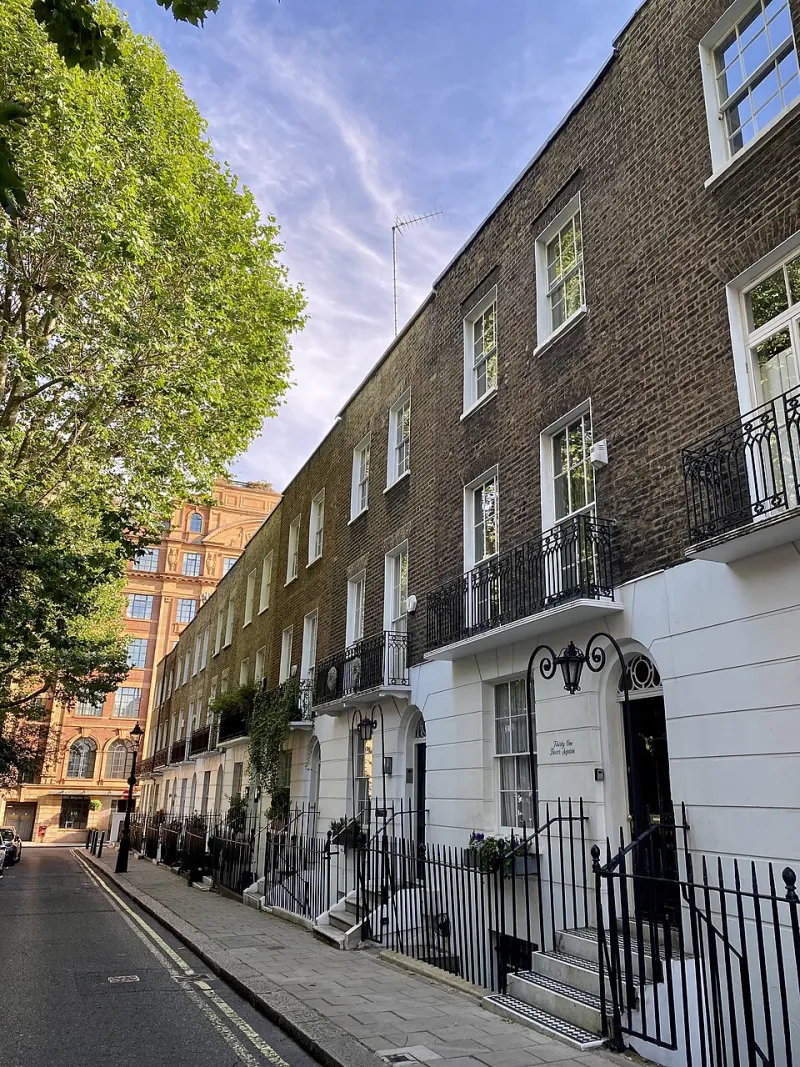
Photo: No Swan So Fine, CC BY-SA 4.0, via Wikimedia Commons
Behind the railings of a private garden square, the most consequential document is rarely the estate agent’s brochure. It is the committee minute: a plain record of who may use the garden, when the lawns are cut, how much residents will pay and what happens when a neighbour disagrees. In 2026, as service charges and leasehold governance face closer scrutiny across the UK, that paperwork matters more than ever.
At Eleventh Square, the appeal of prime city-square living is easy to understand. The railings, the plane trees, the shared garden and the sense of an address set apart all promise a particular kind of urban calm. But a square is not only a piece of townscape. It is a small institution, with rules, budgets, officers and occasionally a very long memory.
The square as a small institution
Britain’s private squares are often described as shared gardens. In practice they are shared responsibilities. The freeholder may own the garden and the railings; leaseholders may hold rights of access through their leases; a management company may collect the garden charge; a residents’ committee may decide how the planting budget is spent. In some squares the legal form is a company limited by shares. In others it is a residents’ management company, a trust, or a freeholder-controlled management company with resident consultation.
The precise structure matters because it determines who can say no. A committee that appears consultative may in fact be advisory. A freeholder that seems remote may hold the decisive vote on a new gate, a film crew or a large tree. A managing agent may run the day-to-day administration while the committee sets the tone. For a buyer, the question is not simply whether the garden is beautiful. It is whether the governance is predictable.
Who sits at the table?
A typical private square brings together several parties. The freeholder or estate owner has an interest in the asset. The management company handles service charges, insurance and maintenance. The garden committee, sometimes drawn from leaseholders or shareholders, considers planting, access and events. A gardener or landscape contractor delivers the work. A managing agent may administer the contracts.
Influence does not always follow occupation. A leaseholder with a share in the garden company may have a formal vote; a tenant may have access rights but no seat at the table. Some squares have a right to manage; others rely on consultation provisions in the leases. The practical answer is to read the lease, the transfer document and the company articles alongside the last few years of minutes. The formal documents tell you what should happen. The minutes tell you what does.
What the minutes can tell you
Committee minutes are not designed as marketing material, which is precisely why they are useful. They may reveal a reserve fund being built for railings, a recurring dispute over keys, a special levy for tree surgery, or a long-running disagreement about short lets. They may also reveal a square that runs quietly and well: routine gardening approvals, modest increases in the garden charge and a clear record of repairs.
Buyers should ask for at least two or three years of minutes and accounts, not merely the current service charge figure. Look for patterns. Is the same item deferred year after year? Are decisions recorded with reasons? Is there a reserve, or does every repair arrive as a surprise? Are residents consulted before expenditure, or after? Silence can be as revealing as argument.
Access, planting and the politics of the parterre
Access is rarely a simple matter of private or public. A garden may be open to keyholders, leaseholders, tenants, guests with fobs, or residents during specified hours. Some squares allow dogs; others prohibit them. Some permit ball games; others protect the lawns for quiet. The rules may be sensible, idiosyncratic or both. What matters is that they are clear and consistently applied.
Planting can be equally political. Mature trees provide shade and value but also roots, leaves and insurance considerations. Low-allergen planting may suit some residents and disappoint others. A vegetable bed, a memorial bench or a new hedge can become a small test of how the committee listens. Events raise the stakes further: summer parties, weddings, filming and corporate hire can bring income, but also noise, access requirements and wear on the garden.
Events, disputes and the quiet exercise of power
Most disputes in private squares are modest in scale but revealing in tone. A noisy contractor, a misplaced key, a drainage problem or an argument over service-charge apportionment can expose whether the committee governs by consent or by habit. The strongest committees record decisions, explain them and keep an eye on the reserve fund. The weakest leave residents to discover the rules only when they have breached them.
For renters, the tenancy agreement should clarify access to the garden, the right to a key or fob and whether guests may use it. A landlord may hold the garden rights personally. A committee may not recognise tenants at all. These are practical questions, not legal technicalities, and they are best asked before the move rather than after the first warm weekend.
Due diligence: questions to ask before you commit
- Who owns the garden, and who controls access?
- What is the annual garden or service charge, and what does it include?
- Is there a reserve fund for major repairs and tree works?
- Can you see recent minutes, accounts and any record of special levies?
- What are the rules on guests, pets, events, filming and short lets?
- How are decisions made, and how are disputes escalated?
- Do leaseholders have consultation rights or a right to manage?
The floor plan tells you how you will live inside the flat. The minutes tell you how you will live outside it. In a prime square, both are part of the value proposition. A well-run garden committee protects the thing that buyers and renters are paying for: not just the view through the railings, but the quiet assurance that the shared life of the square is being looked after.