The Canopy Ledger: Auditing a Square’s Trees Before You Commit

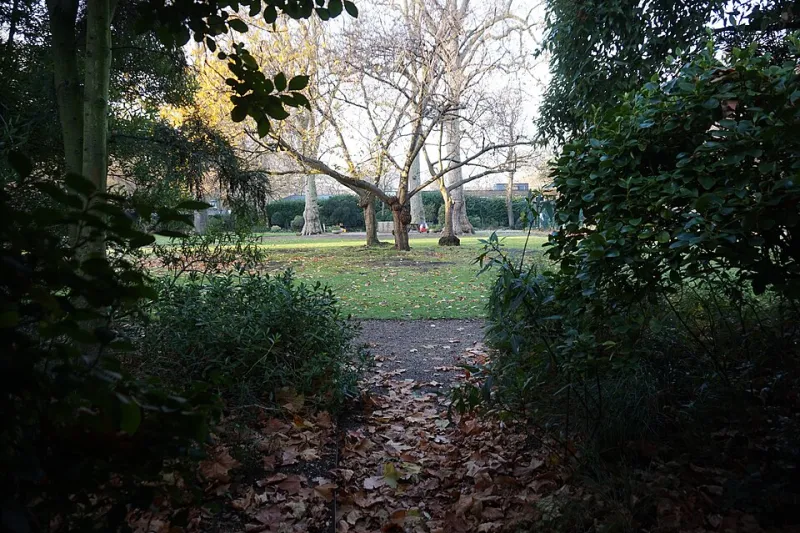
Photo: ChrisInMilton, CC BY-SA 4.0, via Wikimedia Commons
On a prime city square, the trees are rarely incidental. They frame the facade, soften the street and often appear in the estate agent’s first photograph. Yet the canopy is also a shared asset with a ledger attached: legal controls, service-charge liabilities, insurance questions and, occasionally, a structural problem that begins underground. In 2026, with local authority budgets under pressure and insurers scrutinising subsidence claims more closely, that ledger deserves the same attention as the lease or the survey.
At Eleventh Square, we treat the square itself as the unit of value. A mature London plane or a cedar of Lebanon can add dignity and desirability to an address, but it can also constrain what an owner may do, what a tenant may expect and what a management company must budget for. The practical response is not to admire the canopy less, but to read it more carefully.
The canopy as shared infrastructure
Trees on a prime square are seldom the exclusive concern of the house behind them. They may belong to the local authority, to a freeholder, to a residents’ garden committee or to a management company. On private squares, the garden and its planting are often held under a trust or covenant; on public squares, the local authority is likely to be the owner and manager. Before any offer, establish who owns each tree and who is responsible for its maintenance, insurance and removal if it becomes unsafe.
The management pack is the first place to look. It should identify the party responsible for trees, the maintenance schedule, the sinking fund and any recent arboricultural reports. If the pack is thin, ask specific questions in writing. A vague assurance that ‘the gardeners deal with it’ is not a substitute for a named responsibility and a funded plan.
The legal layer: TPOs and conservation areas
Many mature trees on British squares are protected by a Tree Preservation Order, or sit within a conservation area. A TPO can prevent felling, topping or lopping without the local authority’s consent. In a conservation area, six weeks’ notice is generally required for certain works. This matters to buyers who imagine pruning a branch for light, and to renters who assume a landlord can simply cut back a canopy.
Check the local authority’s online mapping and request written confirmation of any TPO or conservation-area designation. If works have been carried out in recent years, ask for the consents and the contractor’s reports. Unauthorised work can lead to enforcement action, and a buyer may inherit the consequences. For renters, confirm who is responsible for seeking consent and whether any proposed works are already approved.
Roots, drains and structural movement
Plane, lime and cedar roots can travel well beyond the canopy. On clay soils, root activity may contribute to subsidence or heave, and old drains can be vulnerable to root ingress. These are not reasons to avoid a square, but they are reasons to ask better questions.
A standard building survey may not examine drains closely. A CCTV drain survey can reveal root intrusion, cracked pipes or previous repairs. Where trees are close to the building, an arboricultural report and, in some cases, a structural engineer’s assessment may be prudent. Ask the seller or landlord for the buildings insurance claims history and any records of movement, underpinning or drainage work. Insurers increasingly want evidence of maintenance, so a documented history is an asset in itself.
Leaf fall, gutters and the service charge
Leaf fall is the most visible cost of a mature canopy. It blocks gullies, hoppers and gutters, stains paving and makes steps slippery in wet weather. On a managed square, these tasks should appear in the service-charge budget: regular clearance in autumn, gutter cleaning, pavement sweeping and sometimes additional window cleaning.
Ask for three years of service-charge accounts and the current maintenance schedule. Look for a line item for tree works and leaf clearance, and check whether the sinking fund is adequate for major pruning or removal. A square with many mature trees and a thin reserve fund may be storing up a special levy. For renters, confirm whether the tenancy agreement makes any separate charge for garden or estate maintenance.
Daylight, shade and the quiet trade-off
Trees reduce daylight. A deciduous plane may be welcome in summer and tolerable in winter; an evergreen cedar casts shade throughout the year. If daylight is important to you, visit at different times of day and in different seasons. Ask whether a daylight or sunlight assessment has been done for the property, and consider how the canopy will look in ten or twenty years.
A ‘right to light’ is a complex legal easement and is not a general remedy against a protected tree. Planning rules do not guarantee sunlight to an existing home. In practice, the tree may be protected and the shade may be permanent. That is not a reason to reject a square, but it is a reason to price the trade-off honestly.
How to audit before you offer
A practical canopy audit can be completed before exchange or before signing a tenancy. Identify every tree that affects the property and establish ownership. Obtain written confirmation of TPO or conservation-area status. Read the management pack and service-charge accounts. Commission a drain survey if roots are near drains or the building. Ask the insurer about subsidence risk and claims history. Visit in autumn and after a storm. Ask about planned tree works and the sinking fund. Renters should confirm access rights, maintenance responsibilities and any restrictions on pruning.
None of this diminishes the pleasure of living under mature trees. It simply ensures that the buyer or renter understands what the pleasure costs, who pays for it and what cannot be changed. On a prime square, the canopy is part of the address. The ledger is part of the purchase.