The Fifth Facade: What a Prime Square’s Roofscape Reveals Before You Buy
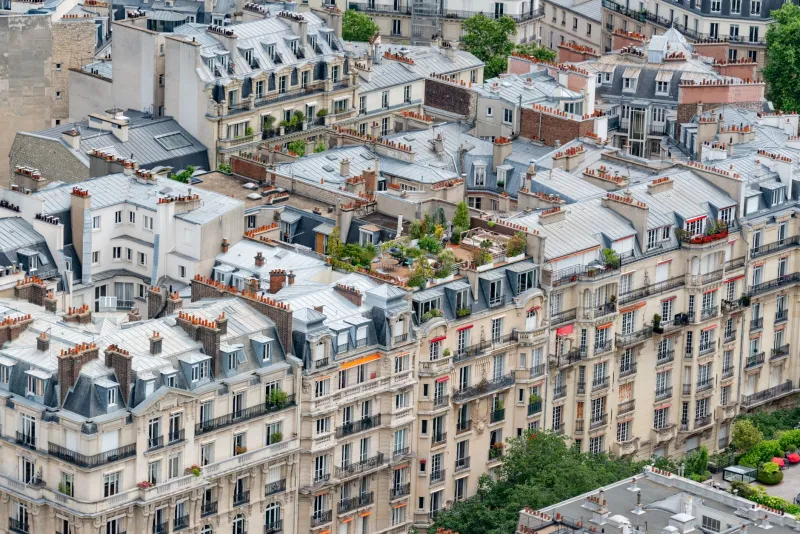
When a prime square is viewed at street level, attention naturally settles on the things that frame daily life: the garden railings, the stone elevations, the width of the pavement and the condition of the communal entrance. Yet some of the most important checks begin higher up. The roofscape — the terraces, slopes, parapets, chimney stacks and rooftop additions that form what surveyors sometimes call the fifth facade — is rarely decorative. On Britain’s prime squares it is a shared technical asset, a planning-sensitive surface and, increasingly, a point of negotiation between leaseholders, freeholders, managing agents and insurers.
For anyone buying or renting in 2026, the lesson is straightforward: do not stop at the parapet. What happens above it can affect service charges, insurance terms, neighbourly goodwill and, in some cases, whether a planned alteration is lawful at all.
Why the roof is rarely a private matter
On a Georgian terrace or a Victorian mansion block, the roof is often less individual than it appears. A terraced house may have its own roof slope, but the covering, parapet and chimney stack frequently perform a collective function. In a block of flats, the structural roof is commonly retained by the freeholder or head landlord, with repair costs recovered through the service charge. In a terrace of separate freeholds, adjoining owners may still be bound by party wall arrangements and by the practical reality that water does not respect title boundaries.
Before exchange, ask your solicitor to identify exactly what the lease or transfer demises. Does the buyer own the roof covering, the roof structure, the airspace above, or none of these? Is there an exclusive right to use a roof terrace, or merely a right of way to inspect? The lease plan and any supplemental deeds matter more than an estate agent’s description. A roof terrace shown on a portal listing is not necessarily a demised asset, and an unauthorised dormer is not made lawful by longevity alone.
Dormers, rooflights and the conservation-area test
Prime squares are disproportionately represented in conservation areas, and many contain listed buildings. In a conservation area, permitted development rights may be narrower than buyers expect, particularly for alterations to roofs, chimneys and front elevations. An Article 4 direction can remove further rights. For listed buildings, listed building consent is required for alterations affecting character, and that includes many works that would otherwise seem minor.
Dormers, mansard extensions, rooflights and flue terminals therefore deserve scrutiny. Even where planning permission is not required, the management company or freeholder may impose a separate approval process. Some leases prohibit structural alteration without written consent; others require the landlord’s surveyor to approve plans and materials. A buyer who assumes that a rooflight is permitted because a neighbouring house has one may be disappointed. Planning history is property-specific, and enforcement is not always swift but can be expensive when it arrives.
Ask the seller for copies of any planning permission, listed building consent, building regulations completion certificate and landlord’s licence for existing rooftop works. If paperwork is missing, take advice before exchange rather than after completion.
Solar panels and rooftop plant
Solar photovoltaic panels are now a familiar sight on British roofs, but they are not automatically suitable for every prime-square property. On a listed building or in a sensitive conservation area, visual impact and fixing methods may require consent. On a flat roof or a mansard, structural loading, waterproofing and wind uplift need professional assessment. Leaseholders should also check whether the freeholder permits panels, who owns the resulting installation and what happens when the roof is next repaired.
Rooftop plant is not limited to solar. Air-source heat pumps, ventilation equipment and telecommunications apparatus can all generate questions about noise, vibration, maintenance access and visual intrusion. Insurers may ask about additional electrical installations, access arrangements and fire safety. A neatly concealed unit is not necessarily a neutral one: it may alter the building’s insurance profile or complicate future roof repairs.
Roof terraces: amenity with obligations
A private roof terrace can be a genuine enhancement, particularly where the square’s garden is communal and outdoor space is at a premium. But terraces bring a cluster of obligations. Structural capacity must be confirmed. Waterproofing and drainage need to be robust. Balustrades must meet building regulations and insurance requirements. Planning permission may be needed, and neighbour objections can arise over overlooking, noise and light spill.
If a terrace is marketed as part of the property, verify that it is included in the lease, that any necessary consent exists and that the managing agent has approved the surface finish and furniture arrangements. Check also whether the terrace sits above a neighbour’s bedroom or reception room; informal use can quickly become a management issue. In a well-run square, roof-terrace rules are usually set out in the lease or house rules, not left to ad hoc tolerance.
Chimneys, parapets and the maintenance ledger
Chimney stacks are among the most exposed elements on older squares. Shared stacks can serve several properties, and responsibility for repair may be divided in ways that are not immediately obvious. Parapets, coping stones, gutters, downpipes and roof lights all contribute to water management. A failed parapet or blocked hopper can cause damp well below the roofline, and remedial work may require scaffolding that is costly and disruptive.
When reviewing service-charge accounts, look beyond the annual balancing figure. Is there a reserve fund for roof replacement? Have recent surveys identified defects? Are there planned maintenance schedules for rain goods, chimney repointing or flat-roof coatings? For larger buildings, ask about the most recent condition survey and any outstanding works. Insurance excesses and exclusions can also be affected by roof access, flat roofs and historic construction.
What to ask before exchange
A practical checklist should include: the lease plan and demise; any roof-terrace rights; planning and listed building consents for existing alterations; landlord or management company approval for solar panels, dormers or rooflights; building regulations certificates; the current service-charge budget and reserve fund; recent roof surveys; insurance terms; and the procedure for future rooftop works. Renters should ask similar questions of the managing agent, particularly where a roof terrace or rooftop amenity is advertised.
The fifth facade is easy to ignore because it sits outside the theatre of a viewing. On a prime square, however, it is part of the property’s legal, financial and social fabric. A careful buyer will look up — and then ask for the paperwork that explains what they are seeing.