The Green Clause: How to Test Whether a Square's Garden Comes With Your Tenancy
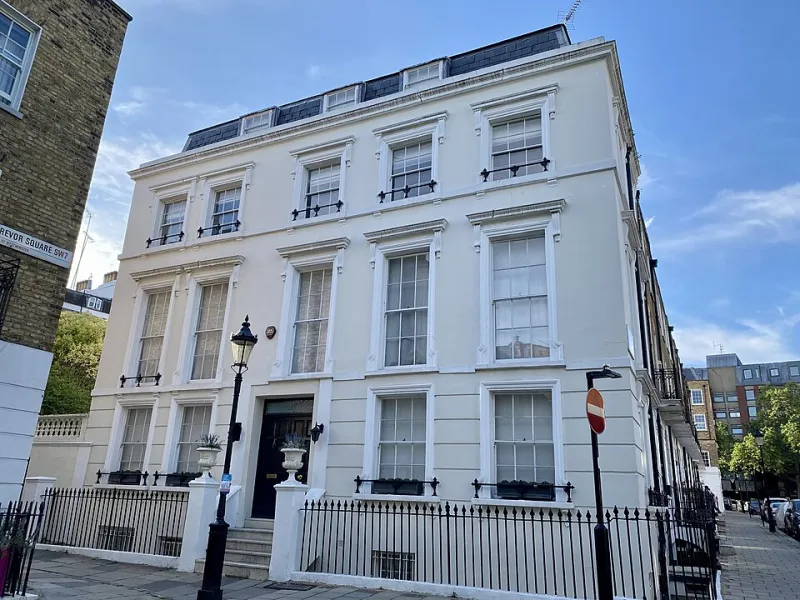
Photo: No Swan So Fine, CC BY-SA 4.0, via Wikimedia Commons
Renting on a private square, the garden is usually the reason. It is also, all too often, the part of the transaction that receives the least scrutiny: a photograph in the listing, a mention in the particulars, a key handed over on the day — or not. The 2026 rental market in prime central and provincial squares has tightened the supply of flats with genuine garden rights, and that scarcity has widened the gap between what the amenity is worth and what it is claimed to be worth. This guide sets out how access is granted, how it is priced, and how to test it before you sign.
Access is granted, never inherited
The common misunderstanding is to assume that a flat facing a private garden has a right to walk into it. It does not follow. Gardens on Britain's private squares are usually held by a company, a trust or a committee of freeholders, and residents participate in that ownership through their freehold or their headlease. A tenant's position is derivative: you hold what your landlord holds, and nothing more.
Where the landlord is a member of the garden company, the tenancy agreement may pass the benefit of that membership on. Where the landlord holds only a long lease that is silent on the garden, or where the garden is owned by a separate entity entirely, an agent's assurance that residents 'have the run of the gardens' should be treated as marketing until it is written into the document you sign.
Three arrangements you will encounter
Included. The tenancy agreement names the garden explicitly, the landlord confirms the right, and keys are issued at check-in. This is the cleanest position, and it should be evidenced by a copy of the clause rather than a verbal confirmation.
Licensed. Access is available, but not automatically. The tenant applies to the garden committee or managing agent, pays an annual subscription, and is bound by the garden's rules. Some squares impose a probationary period, a deposit for the key, and restrictions on guests. This arrangement is perfectly workable, provided the tenancy makes clear who applies, who pays and what happens if permission is refused.
Withheld. The flat overlooks the garden; the landlord retains the keys; the tenant does not. Where the particulars refer to 'communal gardens nearby', the reference may be to a public square a street away. The distinction is not pedantic. It is the difference between an amenity and a view.
Reading the wording closely
Four phrases repay attention. 'In common with other residents' indicates a shared right and will usually be subject to the committee's regulations. 'Subject to the garden rules' means exactly that, and the rules are a separate document you should read. 'By arrangement with the freeholder' is an undertaking to ask, not a promise to receive. 'Access to the garden square' in an agent's brochure, unaccompanied by anything in the lease, is a description of the neighbourhood.
Ask, too, whether the right is personal to the landlord or attached to the flat. A right that lapses on a change of tenant is a different asset from one that runs with the property, and it affects what you can reasonably expect on renewal.
The service charge question
Garden costs sit somewhere, and it is worth knowing where. The gardener's contract, tree surgery, public liability insurance, gate and railing maintenance, the summer party, and the reserve fund for the day the railings need repainting — all of this is funded by someone.
Request three years of service-charge accounts and look for two things: whether garden costs are inside the service charge, and whether the tenancy permits the landlord to recover them from you at cost, sometimes with an administration fee on top. A flat with a modest rent and an unbudgeted annual garden levy is not the bargain it appears. Where the garden is funded through a separate subscription rather than the service charge, confirm the current figure and its recent trajectory; subscriptions on well-managed squares have risen with insurance and labour costs, and a three-year history will tell you more than a single year's number.
What the right is actually worth
The value of garden access is not uniform, and it should not be priced as though it were. A reasonable method is to compare rents on the same square between flats with documented access and flats without it, then adjust for floor level, condition and outlook, which are frequently conflated in the agent's figures. Where no such comparison exists, an uplift of a few per cent on the rent is a common outcome; a substantial premium is harder to sustain for a one-bedroom flat with a balcony, and considerably easier to justify for a family house with children, a dog and a use for the space on a Tuesday evening in June.
Be honest about your own usage. Garden rights that go unexercised for eleven months of the year are still worth having — but not at any price.
Questions to put before signing
- Does the tenancy agreement itself name the garden and describe the right?
- Who issues the key, at what cost, and against what deposit?
- Is the right personal to the landlord, or does it attach to the flat?
- Which rules apply — guests, dogs, hours, events, photography, barbecues?
- What is the annual subscription or levy, and what were the last three years' figures?
- What is the balance of the reserve fund, and what major works are planned?
- Who maintains the boundary hedges and the trees, and who pays for tree surgery?
- What happens to access if the garden company is wound up or the freehold is sold?
- Are there restrictions on subletting that would affect access?
- Are there periods when access is suspended, for events or resurfacing?
- Will the committee confirm the position in writing, not merely the agent?
- Does the landlord in fact hold the right they are purporting to grant?
Question twelve is the one that matters most, and the one least often asked. A landlord cannot confer a right they do not possess, and an indemnity in the tenancy will not produce a key.
Where marketing ends
A genuine amenity has a document behind it: a clause, a subscription receipt, a set of rules, a key. A marketing line has an adjective in front of it. The test is simple and unglamorous — ask for the paperwork, read it, and if it is not there, negotiate the rent on the basis that the garden is a view.