The Collection Choreography: Waste Logistics as a Due-Diligence Signal on Prime Squares
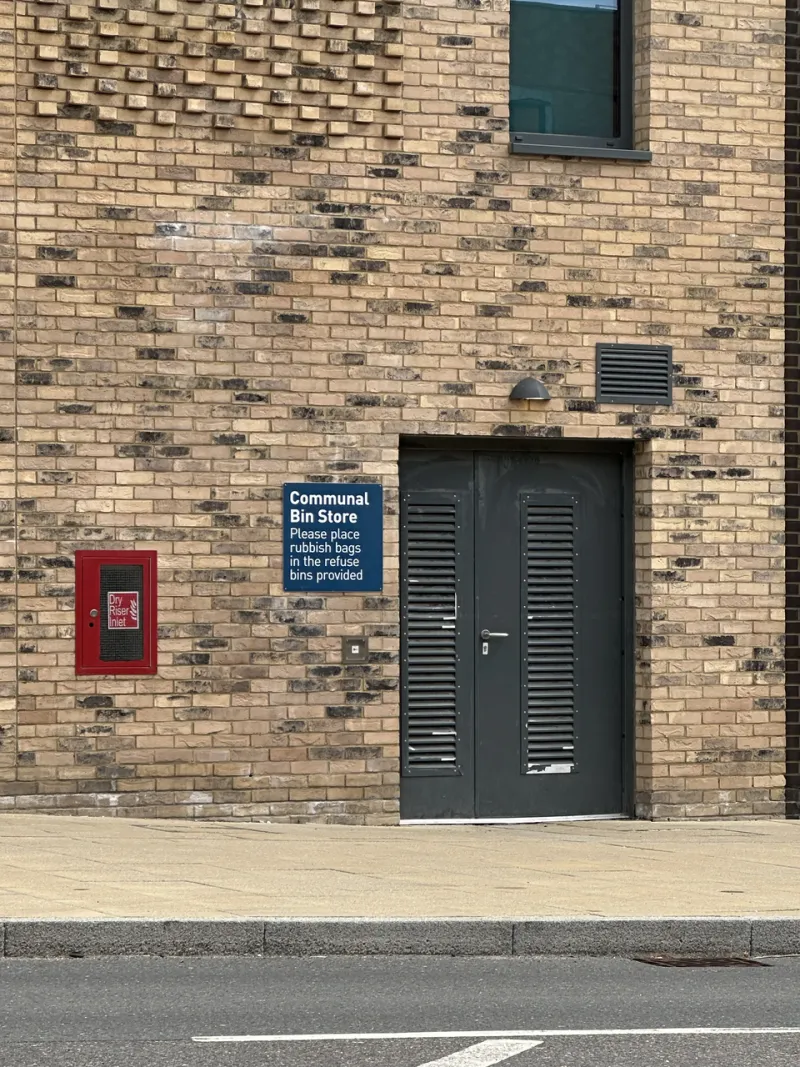
Photo: Sunolafjagtenben-hur, CC0, via Wikimedia Commons
On a prime square, attention tends to settle on the facade, the garden railings and the width of the pavement. The bin store is an afterthought — until the morning after a collection, when the evidence of poor planning is plain to see. In 2026, with councils in England standardising household recycling streams and managing agents under pressure to demonstrate value, waste infrastructure has become a practical due-diligence test. It reveals how a square is managed, how service charges are prioritised and whether the daily logistics of living there have been thought through.
The bin store as a management proxy
Waste is an operational discipline. It requires scheduled cleaning, adequate capacity, pest control, clear signage and a managing agent willing to chase non-compliance. A well-planned bin store is not a luxury; it is evidence that the freeholder or residents’ management company has considered the square as a working system rather than a collection of handsome front doors.
Conversely, a cramped or neglected store exposes underinvestment. Overflowing communal bins, stained paving and a persistent smell are not merely unpleasant. They suggest that service-charge budgets are being directed elsewhere — or that no one has audited the contract for some time. For buyers and renters alike, the bin store is a low-cost way to read the management culture before solicitors become involved.
Access, capacity and the morning test
Begin with the physical route. Measure the door width and threshold; check whether a standard Eurobin can be wheeled out without scraping paintwork or lifting over a step. Look at the gradient of any ramp and the turning space for operatives. In conservation areas and narrow mews, collection vehicles may not reach the store itself, which means bins are marshalled to a holding point. That distance matters: a long drag across paving increases wear, noise and the likelihood of spillage.
Capacity should be assessed against the number of households served, not the size of the store alone. A square with many short-term lets or subdivided flats may generate more waste than its original design anticipated. Ventilation, drainage and a wash-down point are equally telling. A store with no airflow will hold odour; one without drainage will stain and degrade. Pest-proofing — robust doors, sealed joints, no gaps at service pipes — is a basic indicator of competent maintenance.
Where possible, visit on a collection morning rather than a quiet afternoon. Observe how full the bins are before collection, whether recycling is contaminated, and whether operatives have clear access. The morning test is unglamorous but decisive.
Collection times and the nuisance map
Collection schedules shape the lived experience of a square. Early-morning glass collections can echo between terraces; late-morning pick-ups may coincide with school runs and delivery vans. Ask the managing agent for the current schedule and for the last twelve months of waste-related complaints. A square that receives frequent noise or odour complaints is not necessarily badly run, but the response to those complaints is revealing.
Vehicle access deserves scrutiny. Where refuse lorries must reverse or wait, the risk of blocked entrances and damaged kerbs rises. In prime squares with private garden edges, collection points should be agreed and marked rather than improvised. Renters should check whether the tenancy agreement assigns responsibility for moving bins to a specific party; buyers should confirm whether the freeholder’s waste contract covers bulky items or only household refuse.
Recycling compliance and service-charge priorities
The regulatory backdrop is tightening. As standardised recycling collections take hold across England, communal stores must accommodate separated streams without becoming a maze of mismatched containers. Clear signage, consistent bin colours and regular contamination audits are signs of a proactive approach. A store that relies on residents’ goodwill alone will struggle as rules become more uniform.
Service-charge accounts should be read with waste in mind. Look for line items covering bin cleaning, pest control, replacement containers and periodic deep cleans. These are modest sums individually, but their presence or absence signals whether the square budgets for the unglamorous essentials. A store that is cleaned weekly and audited quarterly is likely to be part of a wider regime of planned maintenance; one that is cleaned ‘as required’ is likely to be reactive.
What to ask before you commit
For buyers, put four questions to the managing agent: who owns the bin store, what is the cleaning schedule, how are collection times set, and what is the procedure for reporting overflow or contamination? For renters, ask the same of the landlord or agent, and check whether waste disposal is included in the service charge or billed separately. Record the condition of the store on your viewing notes and, if possible, photograph it. These details are easy to overlook when a square’s architecture is doing the talking.
A prime square can survive a modest bin store; it cannot easily survive a badly managed one. The collection choreography — access, capacity, timing and compliance — is a reliable proxy for how the whole square is run. In 2026, that is worth more than a passing glance on the way to the garden gate.