The Sump and the Surveyor: Auditing Water on Britain’s Prime Squares
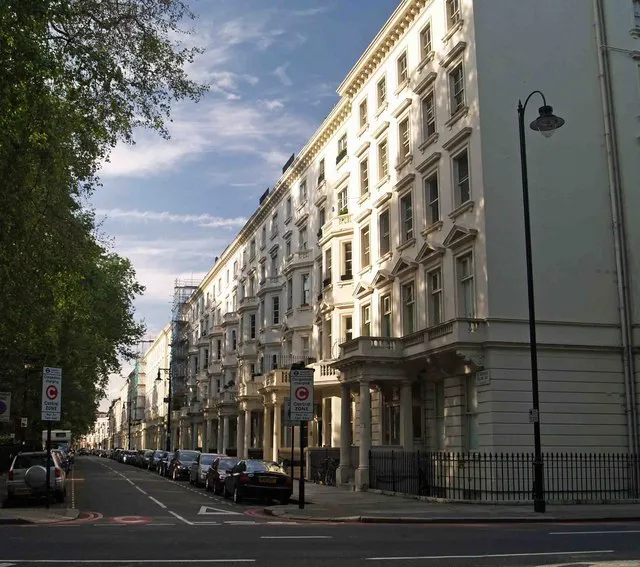
Photo: Steve F, CC BY-SA 2.0, via Wikimedia Commons
Prime square living is usually sold on elevation: the terrace, the garden, the geometry of the address. Water is rarely part of the pitch. Yet on Britain’s older squares, drainage is shared infrastructure, and shared infrastructure is collective liability. A single blocked gully, a failed basement pump or an unrecorded easement can move costs from one house to an entire terrace. At Eleventh Square, we treat the square as a single organism. Before you buy or rent, audit how it sheds water.
Why drainage is a square-wide concern
A prime square is not a row of independent houses with independent pipes. Roof water from one property may discharge into a hopper shared with a neighbour. Surface water may run across paving maintained by a garden committee. Basements may sit below the water table, relying on sumps and pumps that only work if someone services them. Leaseholders pay for communal repairs through service charges; freeholders inherit easements and covenants that can be decades old. The result is that water damage is rarely a private misfortune. It is a governance question.
That matters for buyers because lenders and insurers increasingly ask direct questions about flood risk and drainage. It matters for renters because a tenancy agreement may be silent on who clears a gully or resets a pump after a power cut. And it matters for anyone relying on a management pack: the pack is only as good as the records behind it.
Outside the building: reading the square’s surface water
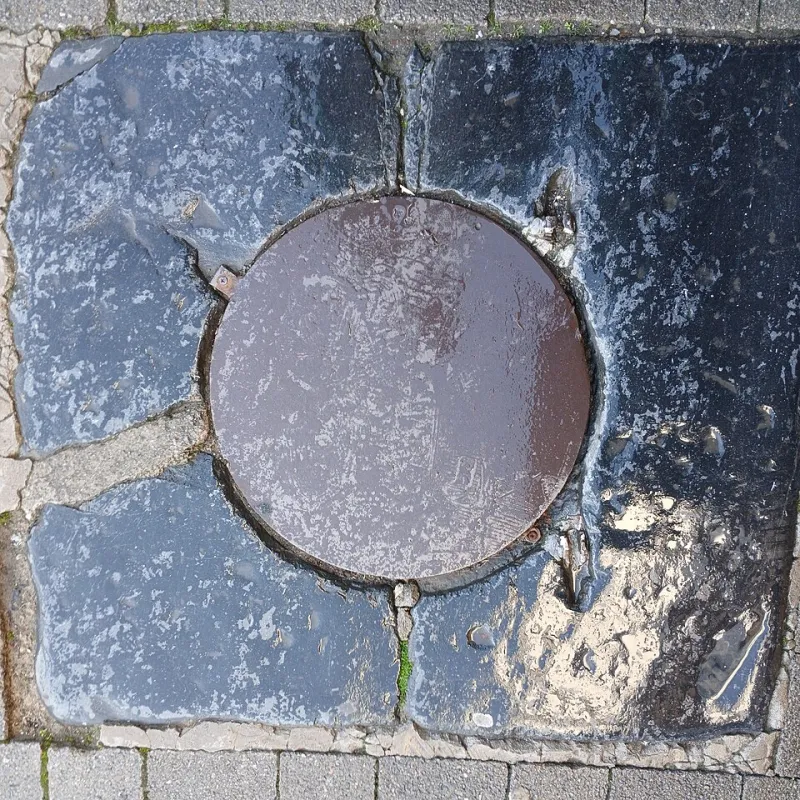
Start at pavement level. On a wet day, walk the perimeter and watch where water actually goes. Good drainage leaves paving free of standing water within minutes; poor drainage leaves dark patches, silt lines and moss in the joints. Look for cast-iron gullies at the base of downpipes, hoppers at roof level and channel drains across carriageways. Check whether downpipes discharge into gullies, into open shoe channels or simply onto paving. The last of these is a common cause of damp basements and frost damage.
Examine the paving itself. Many prime squares have been re-laid with impermeable stone, increasing runoff. Ask whether permeable paving, rain gardens or attenuation tanks were specified, and whether they have been maintained. Look at the camber of the road and the fall of the pavement. Water should move away from thresholds, lightwells and basement access points. If it pools against a door, the problem is not cosmetic.
Lightwells and area wells deserve particular attention. They collect rainwater and leaf litter, and they often sit directly outside lower-ground windows. Check for a working sump, a visible high-water mark, a pump alarm and a non-return valve. Ask when the well was last cleaned. A dry well in November proves little; a tide mark proves a great deal.
Inside the building: a room-by-room water audit
Begin in the basement or lower ground floor. Smell the air. A persistent damp or earthy odour is a signal. Look at the base of walls, under stairs and behind skirtings for blistering paint, tide marks, salt efflorescence and rusted fixings. Test any sump pump by lifting the float; confirm it runs, and ask for the service record. Check whether the pump has battery backup and an audible alarm. A pump without an alarm is a silent failure waiting to happen.
Move to kitchens and bathrooms. Look under sinks for slow leaks, around waste pipes and at the seal where pipes pass through walls. In older squares, lead waste pipes and cast-iron stacks may still be in service. Ask whether they have been surveyed internally. Check ceilings below bathrooms for staining, and pay attention to any room where a ceiling has been recently repainted; fresh paint can conceal a history.
In utility rooms and plant areas, identify the incoming water main, stopcock, pressure-reducing valve and any water softener. Ask about water pressure and whether the mains has ever been replaced. In flats, establish where the responsibility for internal pipework ends and the communal system begins. That boundary is often described in the lease, but rarely in plain English.
The paper trail: management packs and surveyor questions
The management pack should answer more than it conceals. Ask for the last five years of drainage and flood-related repair invoices, not just the service charge accounts. Request any CCTV drain survey, flood risk assessment, basement waterproofing guarantee and pump maintenance contract. If the square has a private garden or shared courtyard, ask who owns the drains beneath it and whether there are easements or rights to drain across neighbouring land.
Put these questions to the managing agent in writing. Who maintains the shared drains, gullies and surface-water system? Has the square experienced sewer surcharge, groundwater flooding or repeated local flooding? Are there any outstanding Section 20 consultations or reserve-fund studies for drainage works? What is the current reserve balance specifically for external and drainage repairs? If the answer is “not separately identified”, treat that as a finding.
Instruct a surveyor with drainage expertise and ask for a CCTV drain survey, not just a visual inspection. Request moisture readings in basements and lower-ground rooms, thermal imaging where damp is suspected, and a test of every sump pump. Ask the surveyor to comment on falls, gullies, hoppers, rainwater goods and the condition of any below-ground waterproofing. If the property is leasehold, ask the solicitor to confirm repairing obligations and whether the freeholder or management company has served notices relating to water ingress.
Insurance, reserves and the renting question
Buildings insurance should be checked for flood cover, excess levels and any conditions about pump maintenance. In some areas, Flood Re may affect how flood risk is priced, but it does not remove the need for maintenance. For leaseholders, confirm who insures the building and whether communal drainage claims have affected the policy. For renters, ask who attends if a basement pump fails at night, whether the tenancy requires the tenant to clear gullies, and whether contents insurance covers water damage.
A square’s drainage is unglamorous, but it is a form of collective wealth. Well-run squares keep records, clear gullies, service pumps and fund reserves. Poorly run squares wait for a storm and then argue about who pays. The difference rarely appears in the brochure. It appears in the sump, the surveyor’s torch and the management pack. Read those before you read the floor plan.