The Subterranean Schedule: Auditing Vaults and Coal Cellars Beneath a Prime Square
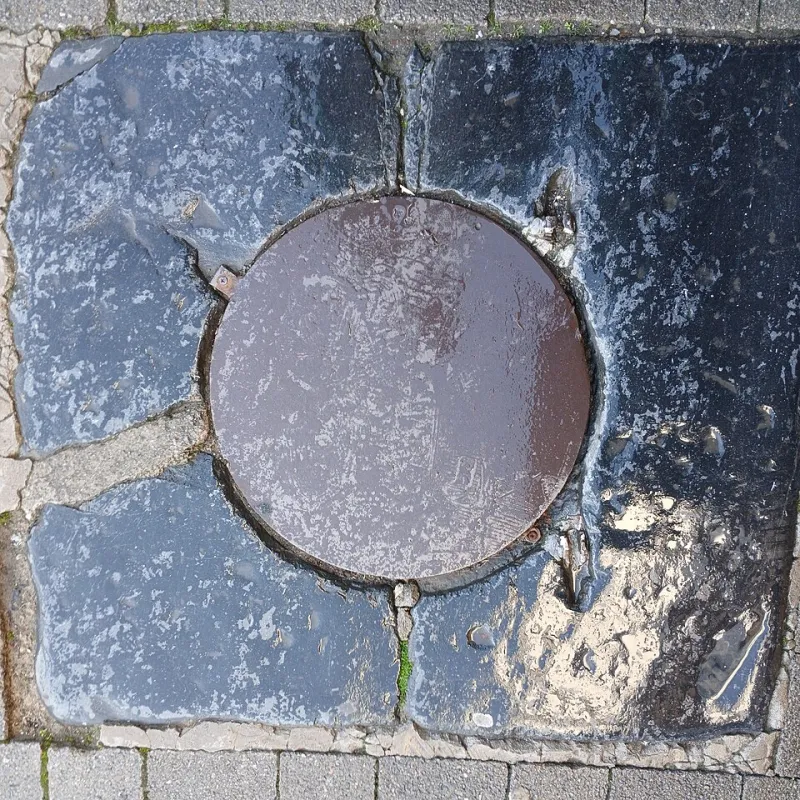
Photo: A.-K. D., CC BY-SA 4.0, via Wikimedia Commons
Prime square houses are usually sold in daylight: sash windows, garden views, a well-swept pavement and the reassuring geometry of a terrace. The transaction, however, is not confined to the visible storeys. Beneath many of Britain’s older squares runs a quieter arrangement of vaults, coal cellars, lightwells and service ducts, some of which belong to the house, some to the freeholder and some to no one in particular until a repair bill arrives. For buyers and renters alike, the underside of a prime square deserves its own line in the schedule of due diligence.
Why the underside deserves attention
A prime square is a shared organism. The surface is governed by garden committees, highway authorities and managing agents; the subsurface is governed by leases, transfers, prescriptive rights and, occasionally, custom. A coal hole cover in the pavement may look like a charming period detail, but it can also be the visible edge of a legal and structural relationship that stretches from the pavement vault to the basement wall. When that relationship is poorly documented, the cost of repairing a failed arch or waterproofing a lightwell can fall unpredictably between leaseholder, freeholder and council.
The issue is not that these structures are inherently problematic. Many are sound, useful and even valuable as storage. The difficulty is that they are easy to overlook. A homebuyer’s survey may concentrate on damp and roof coverings; a title plan may show only the general boundaries of the registered estate. Neither document is designed to answer the question a purchaser eventually asks: who is responsible for the void beneath the pavement, and on what terms?
A short taxonomy of what lies below
Victorian vaults are the most familiar. Often built beneath the pavement to extend a basement, they may be licensed by the local highway authority or held under the freehold subject to rights and reservations. Coal cellars, meanwhile, were designed for deliveries through coal holes and chutes; many are now stores, but their original openings and retaining walls remain part of the building’s structure. Lightwells bring daylight to basement rooms and are vulnerable to blocked drains, cracked paving and failed tanking. Service ducts and old drainage runs add another layer, particularly where later conversions have altered the original arrangement.
The distinctions matter because each element carries a different type of obligation. A vault may be demised to the flat, excluded from the demise but subject to a right of access, or retained by the freeholder and licensed for use. A coal hole may be a structural opening in a public pavement. A lightwell may be the leaseholder’s to maintain but the freeholder’s to insure. None of this is reliably inferred from appearances alone.
The title plan is a map, not a memorandum
HM Land Registry title plans are deliberately general. They show the extent of registered land, not every internal division or subterranean nuance. The registered lease or transfer is the more important document: it may include vaults in the demise, reserve them to the landlord, or grant an easement for access and support. Clauses dealing with repairing obligations, alterations and insurance should be read alongside any plan, not instead of it. Where a lease refers to “the vaults beneath the pavement,” ask for the plan that identifies them and for the licence or consent under which they are held.
It is also worth checking whether the property is in a conservation area and whether any vault or lightwell is subject to a listed building consent regime. Works to a pavement vault can engage highway and heritage considerations at the same time. A cautious buyer will treat any undocumented opening as a question to be resolved before exchange, not a quirk to be absorbed into the price.
Questions for the managing agent
A precise written enquiry is more useful than a general conversation at the viewing. Ask the managing agent to confirm which vaults, cellars and lightwells are included in the demise; which are retained by the freeholder; and what rights of access, support and drainage exist. Request the latest service-charge accounts and any reserve-fund statement, together with records of past works to basement structures. Ask whether any section 20 consultation has concerned waterproofing, pavement vaults or drainage, and whether there are outstanding orders or disputes.
For renters, the questions are narrower but no less important. Does the tenancy include the use of a cellar or vault, or only the flat? Who holds the keys? What access rights exist for inspection and repair? A renters’ guide should establish whether storage is a demised privilege or an informal arrangement that can be withdrawn.
Commissioning the right inspection
A standard valuation or homebuyer-style report is unlikely to resolve subterranean liability. A building surveyor with experience of period property can assess visible damp, ventilation and structural movement, while a structural engineer may be needed where vaults support the pavement or where retaining walls show distress. Drainage CCTV can establish the condition of runs beneath the basement. If hatches or coal holes are sealed, ask why, and whether opening them for inspection is feasible before completion.
The practical checks are unglamorous: ventilation, salts, timber decay, cracked tanking, blocked gullies and the condition of any pavement structure above. A dry cellar in November is not proof of a dry cellar in March. Historical photographs and local authority records can sometimes reveal alterations that the current lease does not mention.
Budgeting for hidden obligations
Hidden obligations rarely arrive as a single dramatic bill. They accumulate through reserve-fund contributions, access licences, insurance provisions and periodic repairs. A buyer should ask the solicitor to summarise the repairing covenants in plain terms and to identify whether any subsurface structure is excluded from the demised premises but still charged to the service charge. Where a vault is licensed rather than owned, the terms of the licence, including fees and revocation rights, belong in the budget.
On a prime square, the address is the amenity; the underside is the liability. Neither should be allowed to eclipse the other. The sensible approach is to treat the subterranean schedule as part of the property’s character and its paperwork: inspect what can be inspected, document what is claimed, and price the obligations that remain uncertain. A square house may be bought for its elevation, but it is often the basement that decides whether the purchase feels settled.