Forecasting the Facade: How Forward Repair Plans Shape a Prime Square Purchase
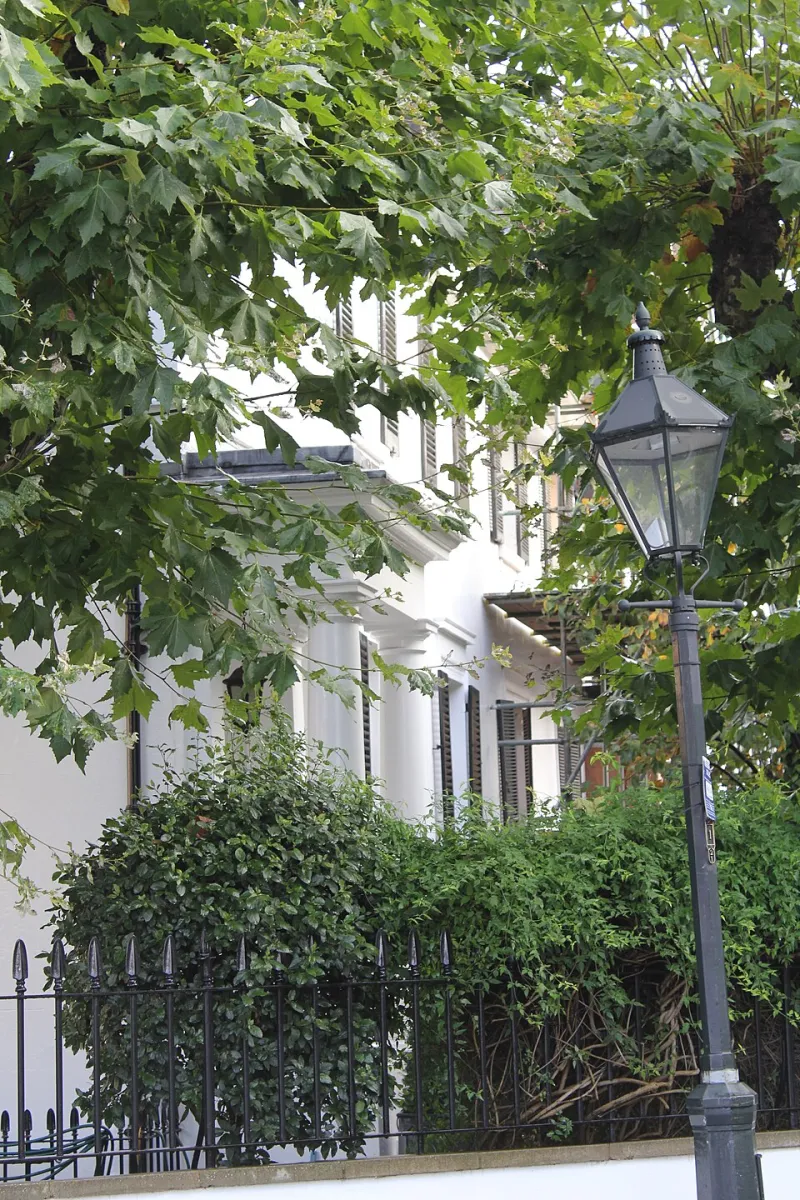
Photo: Edwardx, CC BY-SA 3.0, via Wikimedia Commons
Prime square living is often sold on the poetry of the thing: the terrace, the railings, the communal garden and the sense of a city held at a civilised distance. Yet the same qualities that make these addresses desirable also make them expensive to keep. External fabric on a Georgian, Regency or Victorian square is not a one-off purchase; it is a long-running obligation shared among neighbours. For buyers and renters alike, the practical question is not whether scaffolding will appear, but when — and who will pay for it.
The repair cycle is a financial timetable
Major works on a prime square tend to follow a rhythm. Stucco and painted facades may be refreshed every seven to twelve years, though exposure and previous work can shorten or lengthen that interval. Roofs, parapets and rainwater goods often have a 25- to 40-year horizon. Sash windows, ironwork, stonework and garden railings each carry their own maintenance cycle. Listed-building status and conservation-area controls can add time and cost to even modest repairs.
That rhythm matters because it converts bricks and mortar into a service-charge forecast. A square with a healthy reserve and a clear maintenance plan is a different proposition from one where several large items are drifting towards the same date. The former may justify a premium; the latter may offer room to negotiate.
Documents to request before you commit
A buyer’s solicitor will ordinarily obtain a leasehold management pack, but the useful material goes further. Ask for the past three to five years of service-charge budgets and accounts, reserve-fund statements, the current planned-maintenance programme and the most recent condition survey. A survey prepared by a chartered building surveyor or a firm with conservation experience is more valuable than a general inspection report.
Committee or residents’ association minutes are equally revealing. They are not always polished, but they often record the early signals: a surveyor’s warning about render, a tender for roof repairs, a discussion about a special levy, or a section 20 consultation notice under the Landlord and Tenant Act 1985. Also request any live or pending major-works notices, building-safety information and fire-risk assessments. Renters should ask the landlord or managing agent for the same service-charge history and any known forward works.
Reading the reserve fund without guesswork
A reserve fund is only reassuring if it bears some relation to the work ahead. Compare the balance with the likely cost of the next major project, then look at annual contributions per unit. A square with modest reserves and a facade project on the horizon is likely to require either a special levy or a loan arrangement. Neither is necessarily fatal, but both should be priced into an offer or a rent.
Ask whether a life-cycle cost plan exists. If it does, check whether it is updated and whether the committee has accepted its assumptions. If it does not, treat the absence as a question rather than a verdict. Many well-run squares operate without elaborate documentation, but the buyer should still understand how decisions are made and how funds are accumulated.
Minutes, tenders and the language of intent
Committee minutes reward close reading. Words such as ‘facade’, ‘stucco’, ‘parapet’, ‘roof’, ‘rainwater’, ‘ironwork’ and ‘quinquennial’ are practical flags. So are phrases such as ‘subject to tender’, ‘section 20 notice’, ‘special levy’ and ‘further survey’. A decision ‘in principle’ is weaker than an approved tender; a survey recommendation ‘within twelve months’ is more urgent than a general observation.
Timing is the point. If scaffolding is already being erected, the buyer’s leverage is limited and the cost is likely to crystallise quickly. If a condition survey has identified work but no tender has been approved, there may be time to negotiate. If the works were completed recently, ask for warranties, guarantees and the final account. A past project can be as relevant as a future one.
Turning findings into a forecast
Build a simple five-year view. Start with the current service charge, add the reserve contribution, then model a plausible special levy for the most likely major project. Ask the managing agent to confirm how costs are apportioned between units; a large flat may carry a different share from a smaller house. For renters, consider whether a service-charge cap, break clause or fixed rental term would provide protection if works are imminent.
For buyers, the findings can support several responses. A price adjustment equivalent to the buyer’s share of imminent works is one route. A retention held back until final accounts are known is another. In some cases the seller may agree to cover a defined cost or provide an indemnity, though the lease and the managing agent’s rules will shape what is possible. None of this replaces legal advice; it simply gives the adviser a clearer brief.
The negotiating value of a well-run square
A clear repair schedule is not a defect. It is evidence of competent stewardship. Squares with fully funded reserves, recent surveys and orderly consultation often command confidence precisely because the next scaffold is anticipated rather than discovered. The risk lies in the gap between what residents know and what a newcomer can see from the pavement.
At Eleventh Square, the view is that prime city-square living should be read as a long-term relationship with a shared building. The facade is the headline; the repair plan is the small print. Read it early, price it honestly and negotiate with the timetable in hand.