The Green Ledger: How EPC Ratings Are Quietly Repricing Prime Square Homes
Photo: Anthony O'Neil , CC BY-SA 2.0, via Wikimedia Commons
Few documents arrive in a prime square transaction with less ceremony than the energy performance certificate. It is a two-page PDF, valid for ten years, produced from a desk-based assessment and filed without comment. Buyers glance at the coloured bar, note the letter, and move on to the things that feel more consequential: the ceiling heights, the garden key, the state of the roof.
That habit is becoming expensive. Through 2026 the EPC is migrating from the back of the pack to the front of the conversation — not because the certificate itself has changed dramatically, but because the market around it has. Lenders, insurers, landlords, tenants and, crucially, the next buyer are all reading it more closely than they did five years ago.
What the certificate measures, and what it does not
An EPC is a cost model, not a building survey. It estimates the running cost of heating, hot water and lighting under standardised assumptions — occupancy patterns, thermostat settings, fuel prices — and expresses the result as a band from A to G. The assessment behind it, Reduced Data Standard Assessment Procedure for existing dwellings, relies heavily on defaults where the assessor cannot verify construction. A solid-walled Georgian terrace with later cavity insulation in a rear extension may be modelled as though the whole house were solid; a house with a well-maintained but unrecorded heating system may be penalised for its age rather than its performance.
Two consequences follow. First, the certificate can misstate a building in either direction, so it should never be read as a substitute for a condition survey or a retrofit assessment. Second, because the metric is cost-based, it can produce counterintuitive results: an electrically driven heat pump, which lowers carbon, may score no better — or even worse — than an ageing gas boiler on a certificate that prices electricity higher per kilowatt hour. The government has signalled reform, with additional metrics on fabric and heating systems expected to sit alongside the existing cost measure, but for now the letter on the page is what the market sees.
Why the period square resists the standard playbook
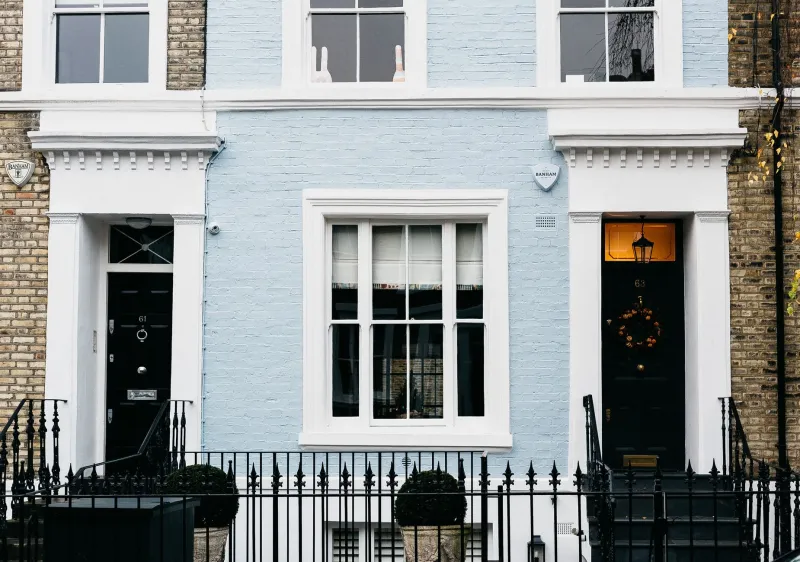
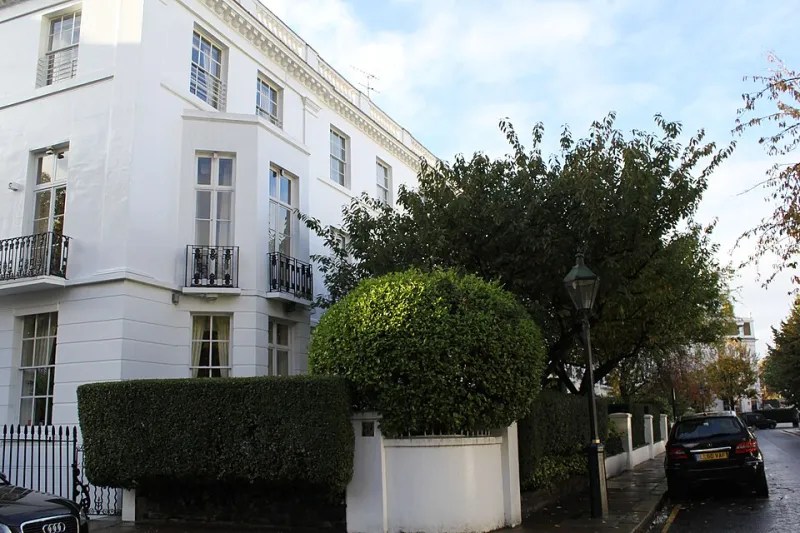
The archetypal prime square house — Bath stone or London stock brick, sash windows, shutters, a slate or lead roof, uninsulated solid walls — is precisely the building type that the standard retrofit sequence handles least gracefully.
Cavity wall insulation, the cheapest large win on a modern house, is unavailable where there is no cavity. External wall insulation, effective on a rendered suburban semi, is usually a non-starter where a uniform terrace elevation gives a square its character. Internal wall insulation is technically feasible but consumes 60 to 100 millimetres of room width on every treated wall, complicates the detailing around joist ends and window reveals, and — if specified poorly in a solid-walled building — risks trapping moisture and pushing the dew point into the historic fabric.
Glazing presents a similar trade-off. Replacing original sash windows is frequently prohibited outright in a conservation area or on a listed building, and where permitted is among the most visible alterations a square will tolerate. Secondary glazing, draught proofing, heavier curtains and the reinstatement of working shutters are the pragmatic alternatives, and their combined effect on comfort is often greater than their effect on the certificate — a gap worth understanding before any offer is made.
Reading the ledger rather than the letter
The practical question is not whether a house is a D or an E. It is which measures, at what cost, under what consent regime, would move it — and whether those measures are ones a buyer would actually want.
Indicative figures help frame the arithmetic. Loft insulation in an accessible roof space remains the cheapest intervention, typically a few hundred pounds to around a thousand. Draught proofing and chimney balloons cost little and deliver comfort immediately. Secondary glazing runs to several hundred pounds per window; sympathetic double-glazed sash replacements, where consent allows, can approach a thousand pounds a window. A well-specified internal wall insulation scheme on a terraced house may fall anywhere between five and fifteen thousand pounds before decoration is made good. An air source heat pump, after the Boiler Upgrade Scheme grant, commonly lands between five and nine thousand pounds, before radiator resizing and any electrical upgrade — and its siting, flue routing and noise output all become planning questions on a protected elevation.
The certificate's own recommendations section is a starting point, not a specification. A retrofit assessment to PAS 2035 standards, carried out by a qualified assessor who has actually inspected the fabric, is the more reliable basis for budgeting.
Consent is a line in the budget
On a listed square, listed building consent is required for alterations affecting character, and the application itself takes time. In a conservation area, permitted development rights are often curtailed by Article 4 directions, so window changes, roof lights, flues and external plant may all need permission. Leasehold houses and flats add freeholder consent; shared garden squares may add a management company's view on visible plant. Party wall awards apply to works on shared walls and excavations.
These are not reasons to walk away. They are reasons to establish the consent position before exchange, when the cost of delay and redesign still belongs to the seller's asking price rather than to the buyer's contingency.
How the market is repricing the letter
The direction of travel in policy is clear even where the detail is still settling. Private rented homes must currently reach band E to be let lawfully, and the government's stated ambition of band C by 2030 remains the reference point against which landlords and their lenders are planning. For owner-occupiers there is no statutory minimum, but mortgage pricing has begun to reflect efficiency: a small but growing cohort of green mortgage products offers preferential rates at bands A and B, while surveyors and valuers increasingly note running costs in their commentary.
The result, on prime squares, is a widening spread rather than a uniform discount. A house with a recent certificate, a documented retrofit and consent-friendly interventions will compete for the same buyers as before, and may attract a modest premium for certainty. A house at the bottom of the band, with original single glazing throughout, an ageing boiler and no assessment on file, is now read by some buyers as a project with an uncosted capital liability attached — and by landlords as a compliance risk with a deadline.
That is the quiet repricing. It rarely announces itself in an asking price. It shows up in the length of time a house sits, in the number of second viewings, and in the questions asked before an offer.
An audit for buyers and renters
Obtain the certificate from the register rather than relying on a marketing pack, and check its date, its assessor and its stated assumptions. Commission a retrofit assessment if the band is below C and the fabric is original. Ask the local conservation officer, in writing, what would and would not be permitted on that specific elevation. Price the measures you would genuinely undertake, not the ones the certificate lists. For renters, confirm the certificate is valid and that any exemption is properly registered before signing.
At Eleventh Square we treat the EPC as part of the address rather than an appendix to it — one more signal, alongside the paving, the trees and the service lane, that separates a square that will hold its value from one that will need to earn it back.