The Plinth and the Pocketbook: Reading a Square’s Monument Before You Buy
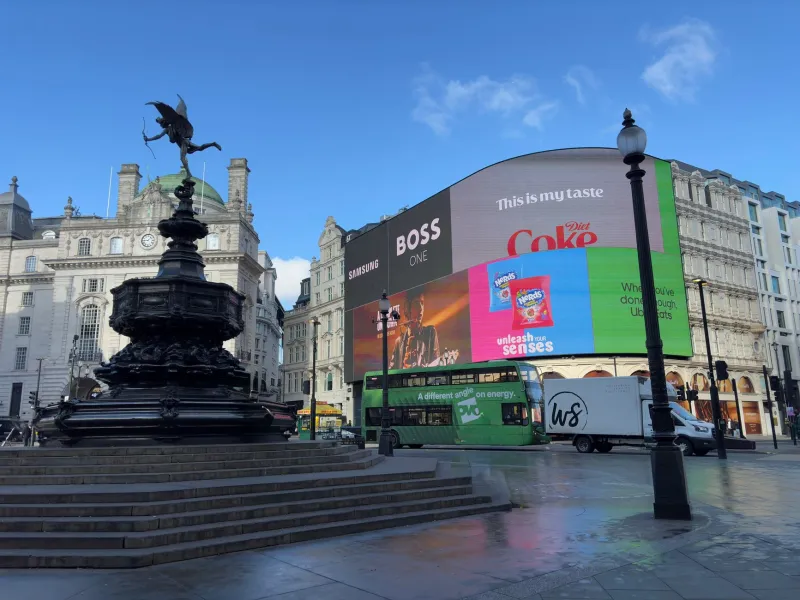
At the centre of many prime squares sits an object that is easy to admire and harder to audit: a statue, a fountain, a clock tower or a war memorial. It gives the address its postcard image and its informal name. It may also carry a distinct legal title, a maintenance obligation and an insurance exposure that does not appear in the estate agent’s particulars.
For buyers and renters, the centre-piece should be treated as part of the property’s infrastructure, not as municipal decoration. The questions are straightforward, even if the answers sometimes are not: who owns it, who pays for it, who insures it, and what can and cannot happen around it?
Start with the title, not the plaque
Ask the seller or landlord for the registered title and title plan for the square itself, and check whether the monument falls within that title. In England and Wales, HM Land Registry records can be searched; in Scotland, the Registers of Scotland; in Northern Ireland, Land Registry. A centre-piece may sit on a separate freehold title held by a residents’ management company, a local authority, a charitable trust or a private owner. The lease or transfer may include rights to use the square but not ownership of the monument. Those are different things.
If the monument is owned by a charity, check its entry with the Charity Commission and ask for the latest accounts. If it is owned by a company, check Companies House. If it is said to be “adopted” by the council, ask for the adoption agreement or maintenance schedule. A verbal assurance that the council “looks after it” is not a due-diligence document.
The consent question: listed, scheduled or simply protected
A war memorial may be listed, and occasionally scheduled as an ancient monument. A fountain or statue may be listed in its own right, or may fall within a conservation area. The practical consequence is that cleaning, repair, repointing, lighting, planting or even temporary structures nearby may require listed building consent, scheduled monument consent or planning permission. Those processes take time and money, and they can affect what a management company is able to do in a hurry after storm damage or vandalism.
Ask whether any consent has been granted for recent works, and whether conditions attached to it have been discharged. Unauthorised works to a listed structure can create enforcement risk and complicate a future sale. For a buyer, this is not an abstract heritage point: it is a potential special levy.
The maintenance ledger
If the monument is within the service-charge estate, its upkeep should appear in the budget and accounts. Ask for the apportionment, the reserve fund position and the planned maintenance schedule. A fountain can be a recurring cost: pumps, filtration, water treatment, electricity, winterisation and stone conservation. A bronze statue may need patination and waxing; a stone plinth may need repointing and structural monitoring.
Look at the last five years of expenditure rather than a single year. One-off repairs — resetting a plinth, replacing a pump, repairing lightning protection — reveal more than routine cleaning. Ask whether the reserve is adequate or whether a special levy is likely. If the monument sits outside the service-charge estate, establish who funds it and whether residents have any legal right to require works.
Insurance and liability
Public liability cover should be in place for the common parts, but check whether the monument itself is included as an insured item. A freestanding sculpture may have a reinstatement value that is not captured by the building policy. Ask who is insured, what the policy excludes, and whether contractors working on the monument are required to carry their own cover.
The liability question is not only about damage to the object. Falling masonry, a defective fountain edge or an inadequately lit plinth can create injury risk. A management company should be able to show a inspection regime and a clear route for reporting defects. For renters, the landlord or managing agent should confirm who is responsible for the common parts.
Events, access and quiet enjoyment
War memorials attract annual services. Fountains may be switched off for maintenance. Squares may host filming, markets, licensed events or civic ceremonies. The lease may reserve rights to the freeholder or local authority, and those rights can affect access, noise and parking. Read the event clauses and ask how often consent has been granted in recent years.
For renters, the key question is what access the tenancy actually grants. A private garden square may be available only to certain residents, and the centre-piece may be visible but not usable. Check the garden clause and any rules on events.
A short due-diligence list
Before committing, ask: Who owns the plinth and the sculpture? Is it listed, scheduled or in a conservation area? Who is legally responsible for maintenance? What has been spent in the last five years? Is there a reserve, and is it sufficient? Who insures the monument, and on what basis? Are events permitted, and how often? What access do residents or tenants actually have?
A monument is not automatically a burden. It can anchor value, give a square its identity and provide a rare piece of shared amenity. But the cost sits somewhere, usually in the service charge or the public purse. Read the plinth as carefully as you would read a roof — and ask for the paperwork before you fall for the view.